Dry needling is commonly used by physiotherapists to help manage musculoskeletal pain and muscle-related symptoms.
But what does it actually do — and should it be used on its own?
What is dry needling?
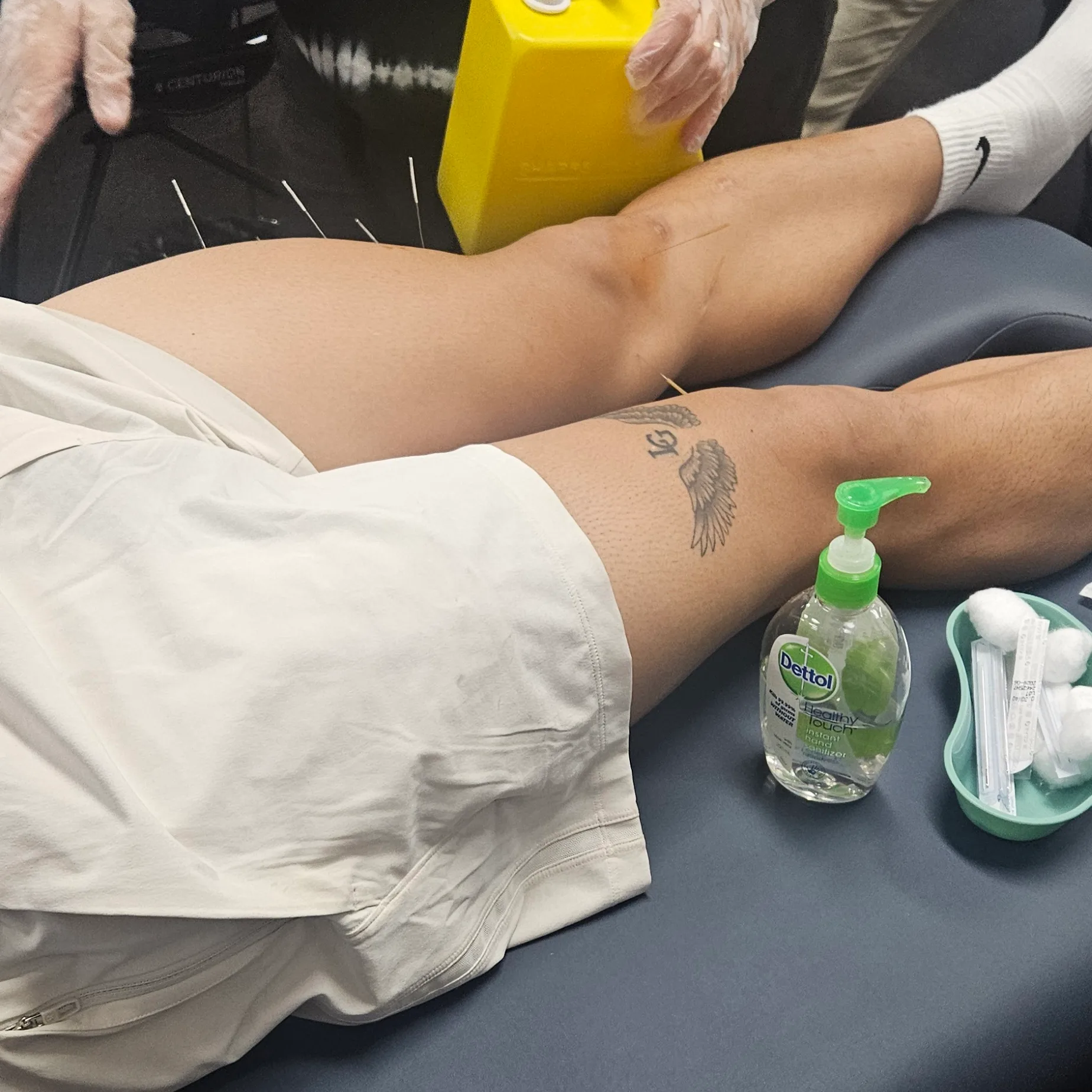
Dry needling involves inserting a fine, sterile needle into targeted muscle or soft tissue.
Unlike an injection, nothing is injected into the body. The technique is commonly used around sensitive or painful areas, including myofascial trigger points, as part of a broader physiotherapy treatment plan.
Patients may feel a brief twitch, ache or cramping sensation during treatment.
What can it help with?
Research suggests dry needling may provide short-term improvements in pain and function for some musculoskeletal conditions.
It is commonly used as part of treatment for:
- Neck pain
- Low back pain
- Shoulder pain
- Lateral elbow pain
- Myofascial pain and muscle-related symptoms
However, the evidence varies depending on the condition, technique and comparison treatment. Dry needling should therefore not be viewed as a stand-alone solution.
Dry needling is an adjunct — not the whole rehab plan
Reducing pain can be useful, but feeling better temporarily does not necessarily mean the underlying problem has been rehabilitated.
At BerryFit, dry needling may be used when clinically appropriate to help reduce symptoms and make movement or exercise more tolerable.
The next step matters more:
Assess → Reduce symptoms → Restore movement → Progressive loading → Return to function
For longer-term improvement, treatment may also involve education, mobility work, strengthening, progressive loading and a gradual return to work, sport or normal activity.
What happens at BerryFit?
We do not automatically use dry needling because a muscle feels tight.
Your physiotherapist first assesses your symptoms, movement, strength and functional limitations. If dry needling is appropriate, it can then be incorporated into the broader rehabilitation program rather than replacing active treatment.
For WorkCover or CTP patients, the same principle applies: treatment should progressively move towards measurable functional goals and return to normal activity or work.
The takeaway
Dry needling can be a useful tool for managing musculoskeletal pain — particularly when short-term symptom relief helps someone move and exercise more comfortably
But the needle is one tool, not the treatment plan
At BerryFit, the goal is not simply to make an area feel better for a few days. The goal is to help you move better, build capacity and return to what you need to do
This article provides general information only and does not replace individual medical or physiotherapy advice
References
Gattie E, Cleland JA, Snodgrass S. The effectiveness of trigger point dry needling for musculoskeletal conditions by physical therapists: a systematic review and meta-analysis. Journal of Orthopaedic & Sports Physical Therapy. 2017;47(3):133–149.
Navarro-Santana MJ, et al. Effectiveness of dry needling for myofascial trigger points associated with neck pain symptoms: an updated systematic review and meta-analysis. Journal of Clinical Medicine. 2020;9(10):3300.
Liu L, et al. Evidence for dry needling in the management of myofascial trigger points associated with low back pain: a systematic review and meta-analysis. Archives of Physical Medicine and Rehabilitation. 2018;99(1):144–152.e2.